
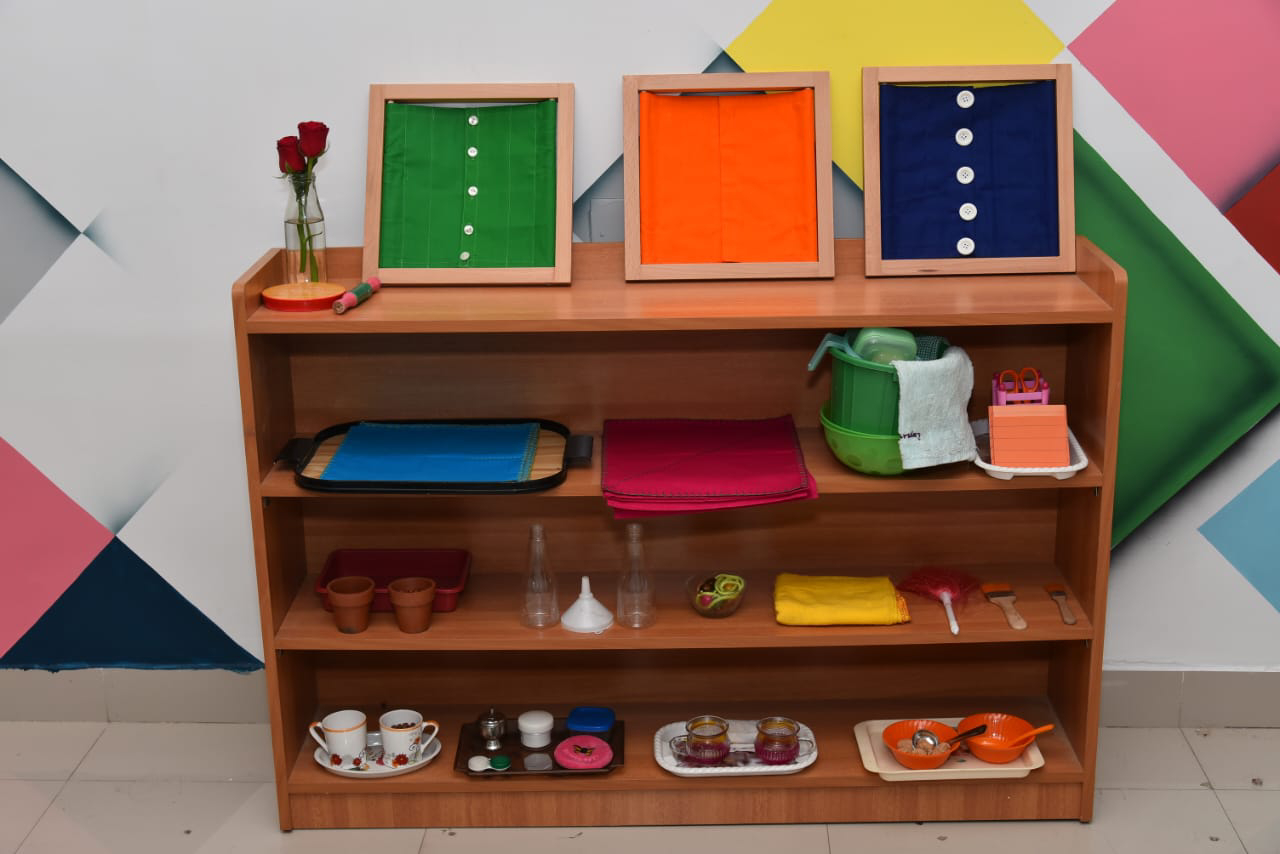
Montessori Exercises of Practical Life (EPL) form the essential foundation of the entire Montessori curriculum, particularly in the Children’s House (ages 3–6). Far from being mere chores, EPL activities are purposeful, foundational tasks based on the real-life activities that children observe in their home and community environment—such as pouring, cleaning, dressing, and greeting. Their primary aim is to lead the child to independence and self-mastery.
Dr. Maria Montessori recognized the child’s innate drive to imitate adult actions. By providing children with the opportunity to engage in this “real work” with appropriately sized, functional tools, the child’s natural tendencies for order, repetition, and purposeful activity are satisfied. This work is not done to achieve a product (like a perfectly clean floor), but to develop the process within the child.
🧠 Key Developmental Benefits of EPL
EPL activities are crucial because they aid in developing a child’s entire being—physical, cognitive, and social.
- Concentration and Will
The structured, repeatable nature of EPL activities helps the child develop a long attention span and the ability to concentrate deeply. The activities follow a specific, logical sequence (e.g., carrying a tray, placing materials, performing the task, cleaning up, and returning the material to the shelf). The child’s intrinsic motivation to complete this cycle leads to self-discipline and the development of will, which is essential for all future learning. - Coordination of Movement
A major benefit is the refinement of fine and gross motor skills. Simple actions like spooning beans, pouring water from a pitcher, buttoning clothes on a dressing frame, or sweeping the floor help refine muscle control and hand-eye coordination. These activities prepare the child’s hand and mind for future academic work, such as holding a pencil for writing (indirect preparation). - Independence and Self-Sufficiency
The core objective is to empower the child to say, “I can do it myself.” When a child learns to dress themselves, prepare a snack, or clean up their own spill, they gain profound self-confidence and a sense of dignity. This self-reliance fosters a positive self-image and reduces their reliance on adults, establishing a crucial sense of self-efficacy. - A Sense of Order
EPL materials are presented in an orderly manner, always complete and returned to the same spot on the shelf. This external sense of order helps the child internalize a framework for logic and organization. This is a direct preparation for organizing and understanding complex concepts in mathematics and language.
🛠️ The Four Categories of EPL
Montessori Practical Life Exercises are typically grouped into four main areas: - Preliminary Exercises
These activities teach basic movements and skills necessary for the classroom environment. They include carrying a chair, rolling and unrolling a mat, carrying a tray, and walking on the line (control of movement). They establish the foundation for successful work in the classroom. - Care of the Person
These focus on personal hygiene and self-maintenance, fostering genuine self-care. Examples include dressing frames (for practicing buttons, zippers, snaps, and ties), hand washing, polishing shoes, and food preparation (slicing fruit, spreading butter). - Care of the Environment
These activities teach the child to contribute to the maintenance of their physical surroundings. They instil a sense of responsibility for the community. Examples include sweeping, mopping a spill, dusting, watering plants, and washing a table. - Grace and Courtesy
These are essential lessons on social behaviour and interactions, helping the child adapt to their culture. Examples include greeting someone politely, offering a chair, interrupting courteously, using manners at snack time, and learning how to ask for help. This category nurtures social skills and respect for others, creating a harmonious classroom community.
In total, the Exercises of Practical Life serve as the great link between the home environment and the more abstract academic work, ensuring the child is fully grounded in reality and prepared for a life of purpose, mastery, and contribution.