
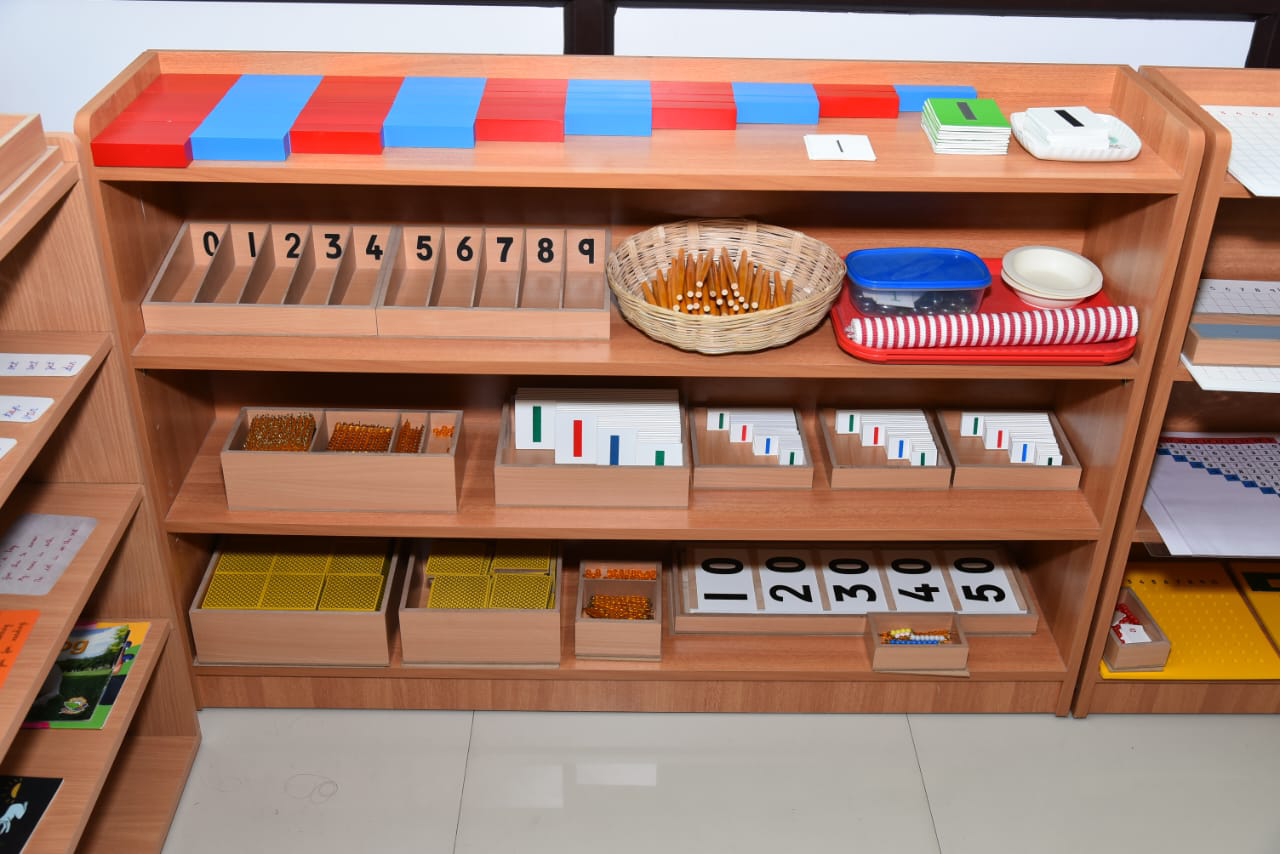
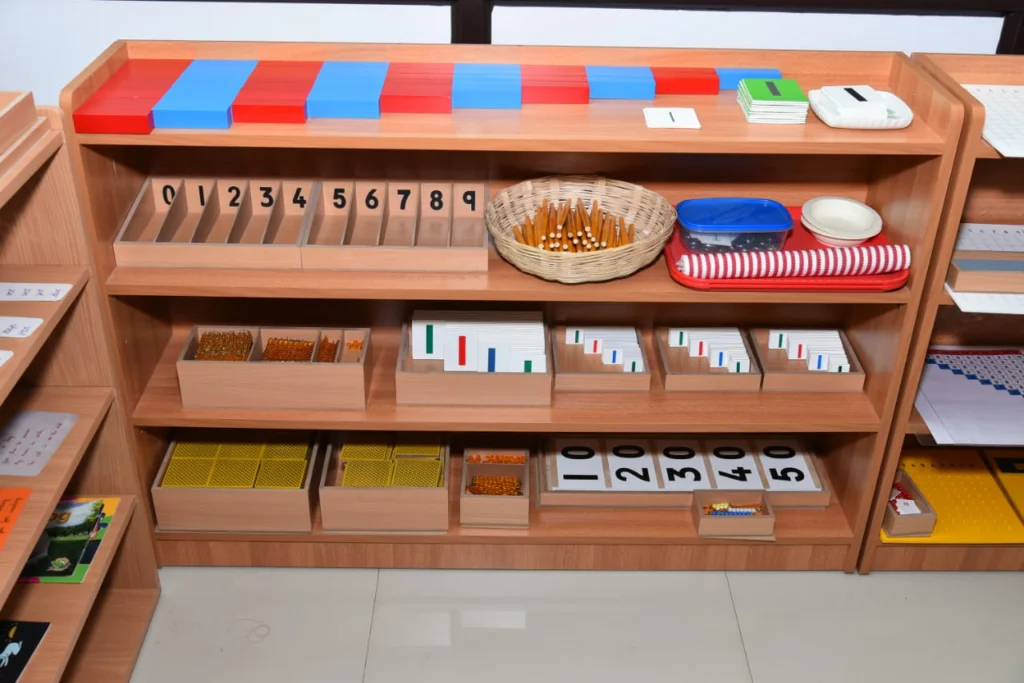
The Montessori approach to mathematics is a highly effective, hands-on, and practical method designed to build a deep, intuitive understanding of numerical concepts, making it a powerful differentiator for any educational institution promoting its curriculum. It moves from the concrete to the abstract, ensuring children experience a concept physically before moving on to symbolic representations.
Key Principles and the Concrete-to-Abstract Journey
Montessori math is underpinned by several core principles that resonate with modern educational psychology:
- Concrete Experience First: All mathematical concepts, from counting to complex operations, are first introduced using tangible, beautiful manipulative materials. This physical engagement creates a strong sensory impression and a “muscle memory” for abstract concepts.
- Isolation of Difficulty: Each material is meticulously designed to teach only one concept at a time. For example, when a child works with the Golden Bead Material , they are solely focused on understanding the Decimal System (units, tens, hundreds, thousands) and Place Value through the size and weight of the beads.
- Auto-Education (Control of Error): Many materials are self-correcting, allowing the child to discover and fix their own mistakes without the need for constant teacher intervention. This fosters independence, critical thinking, and a sense of ownership over their learning.
Essential Materials and Practical Application
The curriculum is a precise, logical sequence of activities.
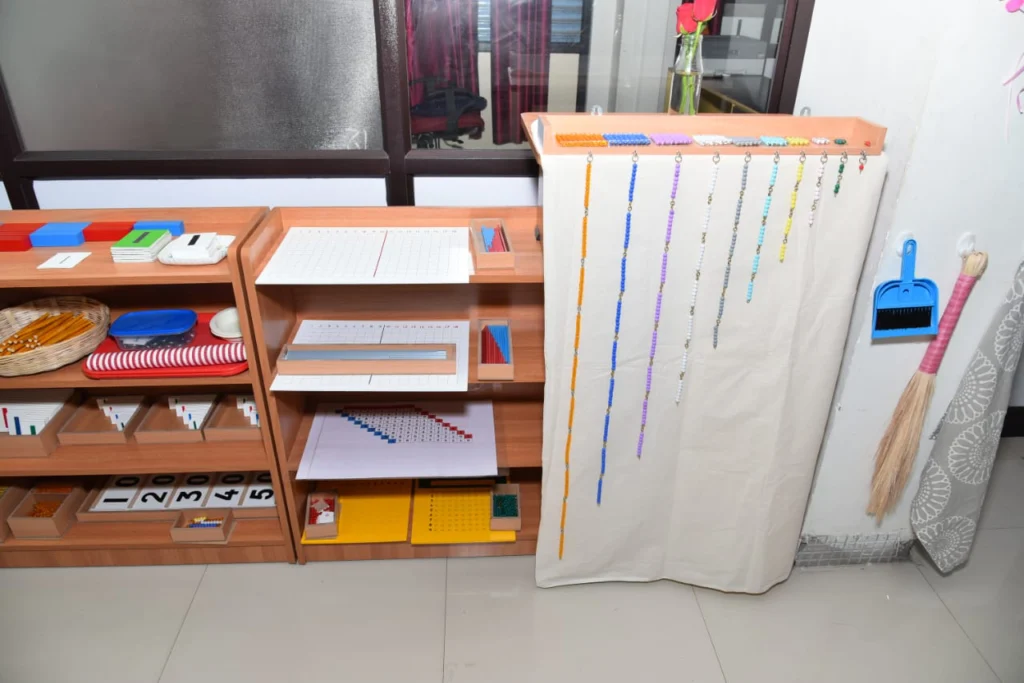
- Numeration and Counting (Ages 3-5)
The foundation begins with recognizing quantity and symbol. Materials like the Number Rods visually represent numbers 1 to 10 as rods of increasing length, demonstrating magnitude. The Sandpaper Numbers teach numeral recognition through a tactile experience, preparing the child’s hand for writing. Cards and Counters then link the quantity (counters) to the symbol (numeral), simultaneously introducing the concepts of odd and even numbers by arranging the counters in pairs. - The Decimal System and Operations (Ages 4-6)
The Golden Bead Material is central here. Children use the unit beads, ten-bars, hundred-squares, and thousand-cubes to perform the four basic operations (addition, subtraction, multiplication, and division) with multi-digit numbers. They are not merely memorizing steps; they are physically exchanging ten units for one ten-bar, or ten hundred-squares for one thousand-cube, thereby internalizing the mechanics of carrying and borrowing in the base-ten system. - Transition to Abstraction
Later materials like the Stamp Game and Bead Frames provide a bridge. The Stamp Game uses small tiles to represent the place values, requiring less physical manipulation than the Golden Beads, pushing the child towards mental calculation. This slow, deliberate transition ensures that when the child finally moves to abstract paper-and-pencil work, they already have a solid conceptual framework for every symbol and equation they encounter.
This practical approach cultivates not just mathematical proficiency, but also concentration, precision, and logical reasoning—skills that are invaluable across all areas of academic and professional life.
CONTACT
OMEGA EDUCATION & INSTITUTE
Union Bank Building, 24 Sengottiah Complex 1st floor Chithambaram Colony, 80 Feet Rd, Periyar Nagar,
Erode, Tamil Nadu 638001. Mobile: 73393 57576, 98430 57576, 73730 57576, Email: omegaeducationalit@gmail.com
Web: www.omega-education.com